


Invisalign vs. Braces for Adults: Cost, Speed, Comfort & Results Compared
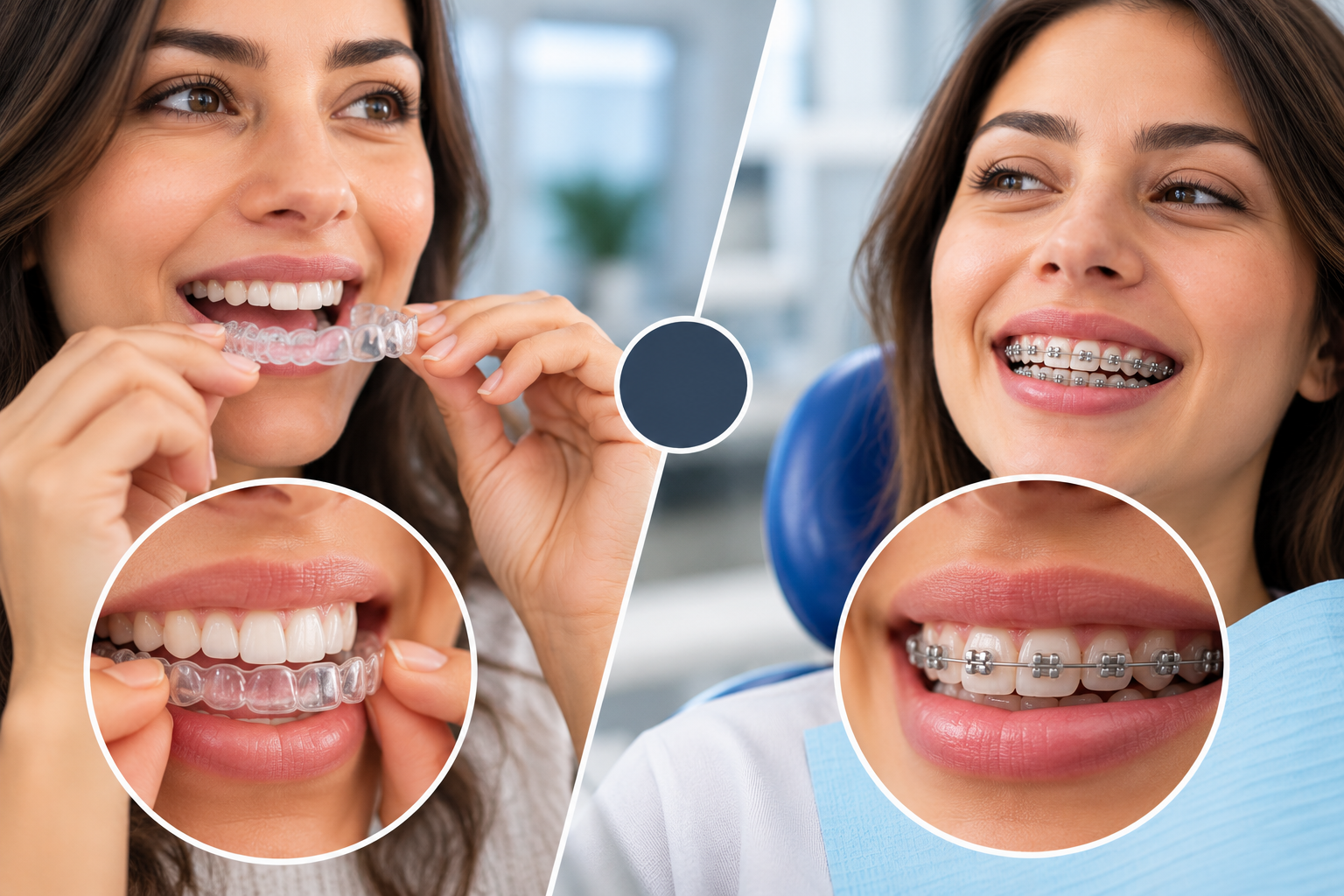


By the Smile Wellness Dental Team · Medically reviewed by Dr. Pooja Tanna, DDS · Updated November 2026
If you're an adult thinking about straightening your teeth, you're in good company. More adults than ever are fixing the crowding, gaps or bite problems they've lived with for years, whether it's the teeth that shifted after braces as a teen, a gap that's always bothered you, or crowding that makes flossing a chore.
And almost everyone hits the same question early on: Invisalign or braces?
It's a big decision. You'll live with your choice every day for months, at work, at dinner, in photos, in meetings. Cost matters, but so does how each option feels, how long it takes, and whether it can actually fix your teeth.
In this guide, we'll compare Invisalign and braces side by side for adults: cost, treatment time, comfort, eating, cleaning, results, and how each one fits into everyday life. We'll also cover the different types of braces (metal, ceramic and lingual), what insurance usually covers for adults, and a simple guide to help you choose.
Quick answer: For most adults with mild to moderate crowding, gaps or bite issues, Invisalign offers a nearly invisible, removable option that makes eating and cleaning easier, as long as you wear the aligners 20–22 hours a day. Braces can be a better choice for complex bite problems or severe rotations, and they work without you having to remember to wear anything. In New Jersey, both typically cost $3,500 to $8,000, and treatment usually takes 12 to 24 months.
In this guide:
- How Invisalign and braces work
- Invisalign vs. braces: the complete comparison
- Cost of Invisalign vs. braces for adults
- Which is faster?
- Comfort, eating and cleaning
- Results: which works better?
- Types of braces for adults: metal, ceramic and lingual
- Things adults should know before starting
- Which one should you choose?
- Orthodontic treatment in Piscataway, NJ
How Do Invisalign and Braces Work?
Both Invisalign and braces straighten teeth the same basic way: by applying gentle, steady pressure that moves teeth into new positions over time. The bone around each tooth slowly reshapes as it moves. The difference is how that pressure is applied.
How Invisalign Works
Invisalign uses a series of custom-made, clear plastic aligners. Each set moves your teeth a tiny amount, and you switch to a new set every 1–2 weeks. Small tooth-colored bumps called attachments are often bonded to some teeth to help the aligners grip. You take the aligners out to eat, drink anything other than water, brush and floss, but you need to wear them 20–22 hours a day for them to work. Learn more about Invisalign clear aligners in Piscataway.
How Braces Work
Braces use small brackets bonded to each tooth, connected by a thin archwire. Your dentist adjusts or changes the wire every few weeks to keep teeth moving. Braces are fixed in place, so they're working 24/7 whether you think about them or not. Many adults today choose more discreet options, like tooth-colored ceramic brackets. See our orthodontic treatment options in Piscataway.
Invisalign vs. Braces for Adults: The Complete Comparison
Here's how the two stack up on the factors adults care about most:
Invisalign vs. Braces Cost for Adults
In New Jersey, Invisalign and braces usually cost about the same, typically somewhere between $3,500 and $8,000, depending on how complex your case is.
Typical market ranges, not the fee schedule of any one office. Your exact cost depends on your teeth and treatment plan.
The single biggest factor in cost isn't the type of treatment. It's how much your teeth need to move and how long treatment takes. A simple case with Invisalign can cost less than a complex case with braces, and vice versa.
For a full breakdown of Invisalign pricing, including what's included, hidden costs and monthly payment examples, see our guide to how much Invisalign costs in NJ.
Does Insurance Cover Braces or Invisalign for Adults?
If your dental plan includes orthodontic coverage, it usually covers braces and Invisalign the same way, often around 50% up to a lifetime orthodontic maximum of 1,000–3,000. The catch: many plans only cover orthodontics for children and teens, often up to age 19. Adult orthodontic coverage exists, but it's less common, so it's worth checking.
You can also use FSA or HSA funds for braces or Invisalign, since both are qualified orthodontic expenses. Many FSAs expire on December 31, so our guide to using your dental benefits before year-end is worth a read if you're starting soon. You can review our dental insurance and financing options in Piscataway and current new patient specials in Piscataway.
Which Is Faster: Invisalign or Braces?
For many adults with mild to moderate cases, Invisalign can be as fast as braces, or faster. Some simple cases finish in as little as 6 months, and many take 12 to 18 months. Traditional braces typically take 12 to 24 months, and complex cases can take longer.
But there's an important catch: Invisalign only works when you wear it. If aligners spend too much time in their case instead of on your teeth, treatment slows down, and you may need extra aligners. Braces don't have that problem, because they're working around the clock.
For complex bite corrections or teeth that need major rotation or vertical movement, braces are sometimes the faster, more predictable option.
(We'll walk through what to expect month by month with Invisalign in an upcoming guide.)
Comfort, Eating and Cleaning: Day-to-Day Life
This is where many adults make their decision, because you'll feel the difference every single day.
Does Invisalign or Braces Hurt More?
Both cause some soreness, especially at the start:
- Invisalign: a feeling of pressure for a day or two with each new set of aligners. The smooth plastic doesn't rub, but edges can feel sharp at first.
- Braces: soreness for a few days after each adjustment, and brackets and wires can rub or poke the inside of your cheeks and lips, especially in the first few weeks. Orthodontic wax helps.
Most adults find Invisalign a little more comfortable day to day, but both get easier after the first couple of weeks.
Eating With Invisalign vs. Braces
- Invisalign: take your aligners out and eat whatever you want. Just brush (or at least rinse) before putting them back in, so food and sugar aren't trapped against your teeth.
- Braces: you'll need to avoid hard, sticky and chewy foods like popcorn, nuts, hard candy, caramel, gum, and biting into apples or corn on the cob. These can break brackets or bend wires.
Brushing and Flossing
- Invisalign: brushing and flossing stay the same, because you just take the aligners out. Clean the aligners daily, too.
- Braces: cleaning takes more time and effort. Food and plaque collect around brackets, so you'll need floss threaders, interdental brushes or a water flosser. Poor cleaning with braces can lead to white spots (early enamel damage) around the brackets.
Either way, keeping up with professional dental cleanings in Piscataway during treatment is important. Our home dental care tips cover the basics.
A Day in Your Life: Invisalign vs. Braces
What Happens If a Bracket Breaks or You Lose an Aligner?
Small mishaps happen with both, and neither is usually an emergency:
- Broken or loose bracket: this is the most common braces problem, often caused by hard or sticky food. If the bracket is still attached to the wire, cover any sharp edge with orthodontic wax and call the office to schedule a repair. A loose bracket isn't moving that tooth, so don't leave it for months.
- Poking wire: push it gently back with the eraser end of a pencil or cover it with wax until you can be seen. Never cut a wire yourself unless your dentist tells you how.
- Lost or cracked aligner: call the office. Depending on where you are in treatment, you may be told to move to your next set early or go back to your previous set while a replacement is ordered. Keep your old aligners in their case for exactly this reason.
- Aligner doesn't fit well: if a new set won't snap fully into place, wear it consistently for a few days and use chewies (small foam cylinders you bite on) to help seat it. If it still doesn't fit, let your dentist know.
If a broken wire or bracket is cutting your cheek, or you've injured your mouth playing sports, our emergency dental care in Piscataway page explains how to reach us, with same-day appointments whenever the schedule allows.
Results: Is Invisalign as Effective as Braces?
For many adult cases, yes. Invisalign can treat crowding, gaps, many overbites and underbites, crossbites and teeth that shifted after earlier braces.
Braces still have an edge for some situations:
- Severe crowding or rotations (especially rounded teeth like canines and premolars)
- Large vertical movements, such as pulling a tooth down into place
- Complex bite corrections involving the jaw
- Patients who struggle with compliance, since braces work regardless
Your dentist will look at your bite, the shape of your teeth and your goals to recommend which option will get you the best result. Either way, the end result is only as good as your retainer afterward. Teeth naturally want to drift back, so wearing your retainer as directed protects your investment.
Invisalign vs. Braces by Problem
Every mouth is different, but here's how the two usually compare for the most common adult concerns:
The key takeaway: for the problems most adults come in with, both options work. The real differences show up in severe or complex cases, and in how each one fits your daily life.
Does Straightening Crooked Teeth Matter for Your Health?
Straight teeth look nice, but the benefits go beyond appearance. Crowded and overlapping teeth are harder to clean, so plaque builds up in spots your brush and floss can't reach, raising the risk of cavities and gum disease. A bad bite can also cause uneven wear, chipped edges and jaw strain over time. Fixing the alignment can make your teeth easier to care for for the rest of your life, and it can make future dental work like crowns or implants easier to place well.
Invisalign vs. Braces: Pros and Cons
Invisalign pros: nearly invisible, removable, no food restrictions, easier cleaning, fewer emergency visits for broken brackets, often more comfortable.
Invisalign cons: requires discipline (20–22 hours a day), you need to remove aligners for every meal and drink, aligners can be lost or broken, and it isn't ideal for every complex case.
Braces pros: work for nearly every case, no need to remember to wear them, often more predictable for complex movements, and metal braces are usually the most affordable option.
Braces cons: more visible (unless ceramic or lingual), food restrictions, harder to clean, can rub and irritate cheeks, more frequent adjustment visits.
Types of Braces for Adults: Metal, Ceramic and Lingual
If you're leaning toward braces, there's more than one kind:
Ceramic braces are popular with adults who want the reliability of braces with a more discreet look. Lingual braces are truly hidden but are more specialized and less common.
What About Mail-Order Aligners?
At-home aligner kits may cost less upfront, but they usually skip the in-person exams, X-rays and regular check-ups that catch problems early. For adults, especially those with gum issues, crowns or past dental work, professional supervision matters. Our Invisalign cost guide explains why the cheapest option can end up costing more.
Things Adults Should Know Before Starting Orthodontic Treatment
Is It Too Late to Get Braces or Invisalign as an Adult?
No. There's no upper age limit for straightening your teeth. As long as your teeth and gums are healthy and there's enough bone to support them, teeth can be moved at 30, 45 or 65. Many adults who come in for orthodontic treatment are in their 40s, 50s and beyond, often because their teeth have slowly shifted over the years or they never had the chance to get braces as kids.
What changes with age isn't whether it works but what needs checking first: gum health, bone levels, old fillings and crowns. That's why a thorough exam comes before any treatment plan.
What Adults Should Check First
Straightening teeth as an adult is very common and very successful, but there are a few things that matter more as adults:
- Gum health comes first. Moving teeth through inflamed gums or weakened bone can cause problems. If you have signs of gum disease, periodontal treatment in Piscataway comes before braces or aligners.
- Cavities need to be treated first. A full dental exam in Piscataway with digital X-rays makes sure your teeth are healthy enough to move.
- Existing dental work matters. Crowns, bridges and implants affect how teeth can move. Implants don't move at all. Tell your dentist about all past dental work.
- Adult bone is denser, so treatment can sometimes take a little longer than for teens, but results are just as good.
- Your lifestyle matters. Frequent business meals, public speaking or contact sports can tip the balance one way or the other.
- Grinding your teeth? Mention it. Your dentist may recommend a custom night guard after treatment to protect your new smile.
Finishing Touches After Straightening
Many adults combine orthodontic treatment with cosmetic touch-ups once their teeth are aligned:
- Professional teeth whitening in Piscataway for a brighter smile, usually best done once your teeth are in their final position
- Tooth-colored bonding to reshape small chips or uneven edges
- Porcelain veneers for a complete smile makeover. Straightening first often means fewer or more conservative veneers are needed.
You can see how these fit together on our page for cosmetic dentistry in Piscataway.
Invisalign or Braces: Which Should You Choose?
Here's a simple way to think about it:
Invisalign May Be Right for You If:
- Your crowding, gaps or bite issues are mild to moderate
- You want treatment that's nearly invisible at work and in photos
- You'd rather not change what you eat
- You're confident you'll wear aligners 20–22 hours a day
- Your teeth shifted after braces as a teen
Braces May Be Right for You If:
- You have complex bite problems, severe crowding or major rotations
- You want treatment that works without you having to remember anything
- You'd rather not take something in and out every time you eat or drink
- Budget is your top priority (metal braces are often the most affordable)
- You want a discreet look but need braces, so ceramic braces are a good middle ground
Still Not Sure?
That's completely normal, and it's exactly what a consultation is for. After an exam, your dentist can show you which options will work for your teeth, how long each would take, and what each would cost, so you can decide with real information rather than guesswork.
Questions to Ask at Your Orthodontic Consultation
Bring these to your appointment so you leave with clear answers:
- Can both Invisalign and braces fix my teeth, or only one?
- How long would each option take for my case?
- What's the total cost of each, and what's included? (Exams, X-rays, adjustments or refinement aligners, and the first retainer.)
- How much will my insurance pay, and can I use my FSA or HSA?
- Do I need any treatment first, like a cleaning, fillings or gum care?
- How often will I need check-ups?
- What happens if I lose an aligner or break a bracket?
- What kind of retainer will I need afterward, and for how long?
A good dental office will answer every one of these openly and put the numbers in writing.
Orthodontic Treatment in Piscataway, NJ at Smile Wellness Dental
At Smile Wellness Dental, we offer orthodontic treatment for adults and teens, including Invisalign clear aligners and braces, under the care of Dr. Pooja Tanna, DDS, at our office at 1080 Stelton Road, a short drive from Edison and South Plainfield.
Here's what you can expect:
- A free orthodontic consultation to see which options fit your teeth
- An honest recommendation, whether that's Invisalign, braces or something simpler
- A clear, itemized quote, plus help checking your orthodontic insurance and FSA benefits
- Affordable payment plans to spread the cost
- Modern planning tools, including the advanced dental technology at our Piscataway office
"You deserve to feel comfortable, and not judged. We listen to you, explain every step and use a very gentle approach. We are here to help you achieve a healthier smile." Dr. Pooja Tanna, DDS, Smile Wellness Dental
If dental visits make you nervous, our guide to taming dental anxiety has practical tips. You can also read Smile Wellness Dental patient reviews on Google, meet the dental team at Smile Wellness Piscataway, or see what to expect at your first dental visit in Piscataway.
Ready to Find Out Which Option Fits You?
The best way to choose between Invisalign and braces is to see what your teeth actually need. Book your free orthodontic consultation in Piscataway, or call our Piscataway dental office with your questions and insurance details.
Smile Wellness Dental 1080 Stelton Rd, Suite 201, Piscataway, NJ 08854 Phone: (732) 572-8888 Mon 9–5 · Tue–Thu 10–6 · Fri 8–4 · Sat 8–1 · Sun closed Get directions to Smile Wellness Dental on Google Maps
Frequently Asked Questions About Invisalign vs. Braces for Adults
Is Invisalign or braces better for adults?
Neither is better for everyone. Invisalign is often the better fit for adults with mild to moderate crowding, gaps or bite issues who want a nearly invisible, removable option and can wear aligners 20 to 22 hours a day. Braces may be better for complex bite problems, severe rotations or patients who prefer treatment that works automatically.
How much do braces cost for adults in NJ?
In New Jersey, metal braces for adults typically cost $3,500 to $7,000, ceramic braces $4,000 to $8,000, and lingual braces $8,000 to $12,000 or more. Comprehensive Invisalign typically costs $4,000 to $8,000. The exact price depends on how complex your case is and how long treatment takes.
Is Invisalign faster than braces?
For many mild to moderate adult cases, Invisalign can be as fast as braces or faster, often taking 6 to 18 months, while braces typically take 12 to 24 months. But Invisalign only works when you wear it 20 to 22 hours a day, and complex cases can be faster and more predictable with braces.
Does Invisalign hurt less than braces?
Most adults find Invisalign slightly more comfortable. Aligners cause pressure for a day or two with each new set but don't have brackets or wires that rub the cheeks. Braces cause soreness after adjustments and can irritate the inside of the mouth, especially in the first few weeks.
Does insurance cover braces or Invisalign for adults?
If your dental plan includes orthodontic coverage for adults, it usually covers braces and Invisalign the same way, often around 50% up to a lifetime orthodontic maximum of $1,000 to $3,000. Many plans only cover orthodontics for children and teens, so check your plan. FSA and HSA funds can be used for both.
What are the different types of braces for adults?
The main types of braces for adults are metal braces, which are the most affordable and durable; ceramic braces, which use tooth-colored brackets that are less noticeable; and lingual braces, which are bonded to the back of the teeth so they're hidden. Clear aligners like Invisalign are a removable alternative.
Can you eat normally with Invisalign or braces?
With Invisalign, you remove the aligners to eat, so you can eat whatever you like, then brush or rinse before putting them back. With braces, you'll need to avoid hard, sticky and chewy foods like popcorn, nuts, caramel and gum, which can damage brackets and wires.
Is it too late to get braces as an adult?
No. There's no upper age limit for braces or Invisalign. As long as your teeth and gums are healthy and there's enough bone to support them, teeth can be straightened at any age. Many adults start treatment in their 40s, 50s and beyond, after a dental exam checks gum health, bone levels and existing dental work.
Do you need a retainer after Invisalign or braces?
Yes. After both Invisalign and braces, you'll need a retainer to keep your teeth from shifting back. Teeth naturally want to drift toward their old positions, so wearing your retainer as directed is the best way to protect your results long-term.
Where can I get Invisalign or braces in Piscataway, NJ?
Smile Wellness Dental at 1080 Stelton Rd, Suite 201, Piscataway, NJ offers orthodontic treatment including Invisalign and braces under the care of Dr. Pooja Tanna, DDS, starting with a free consultation. The office is a short drive from Edison and South Plainfield. Call (732) 572-8888.


