


How Much Does a Root Canal Cost in NJ, With and Without Insurance?
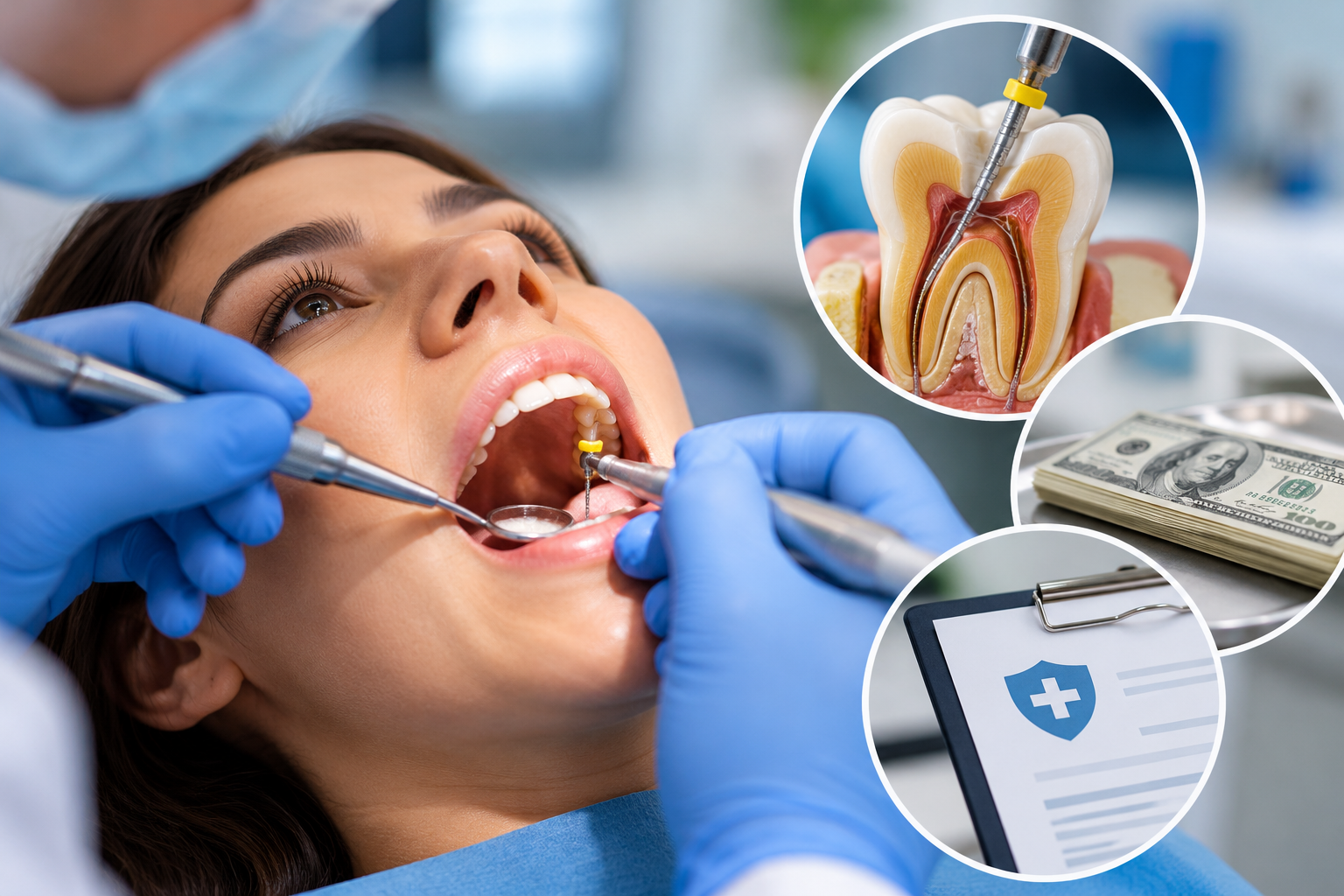


By the Smile Wellness Dental Team · Medically reviewed by Dr. Pooja Tanna, DDS · Updated November 2026
So your dentist just said the words "root canal," and right after the "will it hurt?" thought, a second question probably popped into your head:
"How much is this going to cost me?"
It's a completely fair question. Root canal prices can feel like a mystery: one website says $700, a friend paid $2,000, and somebody on Reddit was quoted even more. And then there's the crown your dentist mentioned, which seems to be a whole separate bill.
Let's clear it all up. In this guide, we'll walk through what a root canal really costs in New Jersey in 2026, why the price changes so much from tooth to tooth, what dental insurance actually pays (with real examples, not vague percentages), and the smartest ways to bring your cost down.
Quick answer: In New Jersey, a root canal typically costs $900 to $1,400 for a front tooth, $1,000 to $1,600 for a premolar, and $1,200 to $2,000 for a molar in 2026, before insurance. Most back teeth also need a crown, typically $1,000 to $3,000, so the total is often $2,200 to $5,000 per tooth. With dental insurance, many patients pay a few hundred to about $1,500 out of pocket.
In this guide:
- Root canal cost in NJ by tooth type
- Why a crown usually doubles the total
- What affects the price
- What dental insurance covers, with worked examples
- How much a root canal costs without insurance
- Root canal vs. extraction: the cost comparison
- Ways to make a root canal more affordable
- Root canal treatment in Piscataway, NJ
How Much Does a Root Canal Cost in New Jersey?
A root canal in New Jersey typically costs between $900 and $2,000 per tooth, depending mostly on which tooth needs treatment. That's a bit higher than the national average, which is common across the New York metro area, including Central Jersey.
Typical market ranges based on national fee data and New Jersey practices, not the fee schedule of any one office. Your exact cost depends on your tooth, and an exam and X-ray are needed for an accurate quote.
Why Do Molars Cost More?
It comes down to how many canals need to be cleaned. A front tooth usually has one straightforward canal. A molar can have three or four, often narrow and curved, tucked at the back of your mouth where they're harder to reach. More canals means more time, more precision and more materials.
What's Included in the Price of a Root Canal?
A root canal fee usually covers:
- Numbing with local anesthetic
- Removing the damaged or infected pulp (the nerve inside the tooth)
- Cleaning, shaping and disinfecting the canals
- Filling and sealing the canals
- A temporary or permanent filling to close the tooth
Not always included, so ask:
- The exam and X-rays (often billed separately but usually covered by insurance)
- The final crown (almost always billed separately)
- A post and core buildup to support the crown
- Sedation, if needed
Why a Crown Usually Doubles the Cost
Here's the part that surprises most people. After a root canal, the tooth is hollowed out and more brittle. A back tooth almost always needs a crown to protect it from cracking under chewing pressure. Front teeth sometimes only need a tooth-colored filling, and in some cases a partial-coverage onlay in Piscataway can protect a tooth while preserving more of its natural structure.
So when you hear "a root canal costs about $1,500," the real number for a back tooth is often closer to $3,000 or more once the crown is included. Our porcelain dental crowns in Piscataway are custom-made to match your natural teeth. (We'll cover when you really need a crown after a root canal, and how soon, in an upcoming guide.)
What Affects the Cost of a Root Canal?
Beyond the type of tooth, several things can push the price up or down:
- Complexity. Curved, narrow or calcified canals take longer to treat.
- Infection or abscess. A more advanced infection may need extra visits.
- First-time vs. retreatment. Redoing a failed root canal is more complex and costs more.
- General dentist vs. endodontist. Root canal specialists (endodontists) often charge 10–50% more, typically for complex cases.
- Imaging. Digital dental X-rays are standard. A 3D scan may be added for tricky cases.
- Emergency visits. Treating severe pain the same day may involve an extra emergency exam fee.
- Sedation, if you need help relaxing.
- Location. Prices in the New York metro area tend to be higher than the national average.
General Dentist vs. Endodontist: Does It Change the Price?
Many root canals are done by general dentists, while more complex cases may be referred to an endodontist, a dentist with two to three years of extra training focused on root canals.
For most patients, having the root canal done by their regular dentist is simpler and often more affordable, because the crown is placed in the same office. A good dentist will refer you to a specialist when a case truly needs it, and explain why.
How Many Visits Will You Pay For?
Many root canals are finished in one or two visits. The cost usually covers the root canal itself, whether it takes one appointment or two. Separate visits and fees typically include:
- The exam and X-rays to diagnose the problem
- The root canal (one or two appointments)
- The crown preparation, when the tooth is shaped and impressions are taken
- The crown placement, a few weeks later
If you come in with severe pain, the first visit may focus on relieving the pain and draining any infection, with the rest of the root canal finished at a follow-up appointment.
How Much Does a Root Canal Retreatment Cost?
If an old root canal has become reinfected, it can often be retreated: the old filling material is removed, the canals are cleaned again, and the tooth is resealed. Because it's more complex, retreatment typically costs $1,200 to $2,500 in New Jersey, plus any new crown.
Does Dental Insurance Cover a Root Canal?
Yes, most dental plans cover root canals. Depending on your plan, root canals are classified as either basic or major services:
But coverage percentages are only half the story. Your deductible and especially your annual maximum matter just as much, and that's what most cost guides leave out.
Root Canal With Insurance: A Real Example
Let's say you need a molar root canal ($1,500) and a crown ($1,500). Your plan has a $50 deductible, covers root canals at 80%, crowns at 50%, and has a $1,500 annual maximum, none of it used yet this year.
If you do both in the same year:
Notice what happened? Your plan should cover 50% of the crown ($750), but your annual maximum ran out, so insurance only paid $340.
The Smart Move: Time Your Crown for the New Year
Now, let's say you have the root canal in November or December and the crown in January, when your benefits reset:
Same treatment, $385 less out of pocket, just by timing it across two benefit years. Your dentist usually places a temporary filling after the root canal, and the crown should go on within a few weeks, so a December-to-January schedule works well. Our guide to using your dental insurance before December 31 explains this strategy in more detail.
These are illustrative examples. Your actual costs depend on your plan, so the office can verify your exact benefits before treatment.
Does Delta Dental Cover Root Canals?
Most Delta Dental plans cover root canals, often as a basic or major service, subject to your deductible and annual maximum. The same is true for most PPO plans from MetLife, Cigna, Aetna, Guardian and others. Smile Wellness is in-network with all of these and more. You can see the full list of dental insurance plans accepted in Piscataway.
Watch for Waiting Periods
If your dental plan is new, it may have a waiting period of 6 to 12 months before covering basic or major services like root canals. If you're in pain, don't wait it out, though. Ask about payment options instead, since delaying can make the problem (and the cost) worse.
Does Medicaid or Medicare Cover Root Canals?
Original Medicare doesn't cover routine dental care, including root canals. Some Medicare Advantage plans include dental benefits that may help. Medicaid and NJ FamilyCare dental coverage varies by plan and age group, so check with your plan, and ask the dental office whether they accept it.
How Much Is a Root Canal Without Insurance?
Without insurance, you pay the full fee. In New Jersey, that typically means:
That's a big number, but it doesn't have to be paid all at once, and there are real ways to bring it down (see below).
Your Right to a Good Faith Estimate
If you're uninsured or paying out of pocket, the federal No Surprises Act gives you the right to a Good Faith Estimate of expected charges before scheduled treatment. Always ask for a written, itemized estimate that includes the root canal, buildup and crown, so you know the real total upfront.
Root Canal vs. Extraction: Which Costs Less?
On the day of treatment, pulling a tooth is cheaper. A simple extraction typically costs $150 to $400 in New Jersey. But that's rarely the end of the story.
Once a tooth is gone, you'll usually want to replace it to keep neighboring teeth from shifting and the jawbone from shrinking. A dental implant typically costs $3,500 to $6,000, and a porcelain dental bridge or partial denture also adds up. So over time, saving your natural tooth with a root canal and crown is usually the more affordable choice, and nothing works quite like your own tooth.
If extraction is the right call for your situation, our guide to tooth extraction cost, recovery and dry socket covers what to expect, and our dental implant cost guide for New Jersey breaks down replacement options. (We'll compare root canal vs. extraction in full in an upcoming guide.)
Why Waiting Usually Costs More
It's tempting to put off a root canal, especially when money's tight. But tooth infections don't heal on their own, and waiting often makes treatment more complicated and more expensive:
- A small infection can become an abscess, sometimes needing extra visits or emergency care.
- The tooth can weaken or crack, so it can no longer be saved, and you're paying for an extraction and a replacement.
- Emergency visits for sudden pain or swelling can add costs you didn't plan for.
If you're not sure whether your tooth needs a root canal yet, our guide to the 7 warning signs you need a root canal can help. And if you're dealing with severe pain or swelling right now, read what counts as a dental emergency, or call for emergency dental care in Piscataway.
How to Make a Root Canal More Affordable
Here are the most effective ways patients lower their costs:
- Use your insurance wisely. Time the root canal and crown to make the most of your annual maximum. Use this year's remaining benefits, and plan the crown for January if your maximum is nearly used up.
- Pay with FSA or HSA funds. Root canals and crowns are FSA- and HSA-eligible, so you pay with pre-tax dollars. Many FSAs expire on December 31.
- Ask about monthly payment plans. Financing can spread a $3,000 root canal and crown into about $250 a month over 12 months, before any interest. See our dental financing options in Piscataway.
- Check current new patient specials in Piscataway.
- Consider a dental discount plan if you don't have insurance. These membership plans aren't insurance, but they offer reduced fees at participating offices.
- Ask about a dental school clinic. In New Jersey, the Rutgers School of Dental Medicine offers treatment at reduced cost. Expect longer and more frequent appointments, since students work under faculty supervision.
- Don't wait. Treating the problem early is almost always cheaper than treating it later.
What If You Can't Afford a Root Canal Right Now?
You're not alone. Plenty of people get a root canal quote and wonder how they'll manage it. Before you decide to ignore the tooth or ask to have it pulled, talk to your dentist about these options:
- Start with pain relief. In many cases, the dentist can open the tooth and remove the infected nerve tissue first, a step that often brings fast relief. The rest of the root canal and the crown can follow on a planned schedule.
- Phase the treatment. Your dentist may be able to place a protective temporary filling and schedule the crown when your benefits reset or your budget allows. Just don't leave a temporary for months, because the tooth can crack or become reinfected.
- Spread the cost. Monthly payment plans and financing can turn one big bill into smaller, predictable payments.
- Use pre-tax money from an FSA or HSA if you have one.
- Avoid repeated ER visits for antibiotics. Antibiotics may calm the infection for a while, but they don't fix the tooth. The pain usually comes back, and the costs add up.
The most expensive option is usually waiting until a saveable tooth becomes an extraction and a replacement. An honest conversation with your dentist about your budget is the best first step.
Questions to Ask Before You Accept a Root Canal Quote
Whether you're comparing offices or just want to understand your bill, these questions help you avoid surprises:
- "Does this price include the crown and the buildup, or just the root canal?"
- "Which tooth is it, and how many canals does it have?" (This explains most of the price.)
- "Will you do the root canal here, or refer me to a specialist?"
- "How much will my insurance pay for each part, and how much of my annual maximum is left?"
- "Would it save me money to place the crown after January 1?"
- "What happens, and what does it cost, if the tooth needs retreatment later?"
- "Do you offer payment plans, and can I use my FSA or HSA?"
A good dental office will answer all of these happily, in writing.
Is a Root Canal Worth the Cost?
For most people, yes. A tooth that's had a root canal and a well-made crown can last for many years, often a lifetime, with good care. You keep your natural tooth, your bite stays balanced, and you avoid the bigger cost of replacing a lost tooth.
And here's something worth knowing: modern root canals are done with local anesthetic, and most patients say it feels similar to getting a filling. The pain people associate with root canals is usually the infection before treatment, not the treatment itself. If you're anxious about it, our guide to taming dental anxiety has practical tips.
Protecting Your Investment After a Root Canal
- Get the crown placed on time if your dentist recommends one. Waiting too long risks a crack.
- Brush and floss carefully around the treated tooth. Here are our home dental care tips.
- Keep up with regular dental exams in Piscataway so any problem is caught early.
- Avoid chewing ice or very hard foods on the treated tooth.
Root Canal Treatment in Piscataway, NJ at Smile Wellness Dental
At Smile Wellness Dental, Dr. Pooja Tanna, DDS, provides gentle root canal treatment in Piscataway at our office at 1080 Stelton Road, a short drive from Edison and South Plainfield.
Here's what you can expect:
- A clear diagnosis first: we confirm whether you really need a root canal, or whether a filling is enough
- An itemized estimate that includes the root canal, buildup and crown, so there are no surprises
- Insurance verification before treatment, plus help timing your care to make the most of your benefits
- Thorough numbing and a gentle approach for a comfortable experience
- Modern tools, including the advanced dental technology at our Piscataway office, for precise treatment
"[DRAFT FOR DR. TANNA TO APPROVE] I always walk patients through the full cost, the root canal and the crown, before we start. When people see the numbers clearly and understand how their insurance works, the decision gets a lot less stressful." Dr. Pooja Tanna, DDS, Smile Wellness Dental
Before your visit, you can read Smile Wellness Dental patient reviews on Google, meet the dental team at Smile Wellness Piscataway, and see what to expect at your first dental visit in Piscataway.
Get Your Root Canal Cost Estimate
The only way to know your real cost is an exam and X-ray. When you're ready, book your root canal consultation in Piscataway, or call our Piscataway dental office with your insurance details, and we'll check your coverage before you come in.
Smile Wellness Dental 1080 Stelton Rd, Suite 201, Piscataway, NJ 08854 Phone: (732) 572-8888 Mon 9–5 · Tue–Thu 10–6 · Fri 8–4 · Sat 8–1 · Sun closed Get directions to Smile Wellness Dental on Google Maps
Frequently Asked Questions About Root Canal Costs
How much does a root canal cost in New Jersey?
A root canal in New Jersey typically costs $900 to $1,400 for a front tooth, $1,000 to $1,600 for a premolar, and $1,200 to $2,000 for a molar in 2026, before insurance. Most back teeth also need a crown, which typically adds $1,000 to $3,000.
How much is a root canal without insurance?
Without insurance, a root canal typically costs $900 to $2,000 in New Jersey, depending on the tooth. Including the post and core buildup and a crown, the total for a molar is often about $2,450 to $5,500. Payment plans, FSA or HSA funds, and discount plans can help.
How much is a root canal with insurance?
With dental insurance, many patients pay a few hundred dollars to about $1,500 out of pocket for a root canal and crown. Most plans cover root canals at 50% to 80% and crowns at about 50%, but your deductible and annual maximum can limit how much the plan actually pays.
Does dental insurance cover root canals?
Yes, most dental insurance plans cover root canals as a basic or major service, typically at 50% to 80% after the deductible, up to the plan's annual maximum. New plans may have a waiting period of 6 to 12 months before root canals are covered.
Why is a root canal so expensive?
A root canal takes time, precision and specialized tools to clean and seal narrow, often curved canals inside the tooth, especially in molars with three or four canals. The price also reflects the anesthetic, X-rays and materials, and most back teeth need a crown afterward, which adds to the total.
Is a root canal cheaper than pulling the tooth?
An extraction costs less upfront, typically $150 to $400 for a simple extraction in New Jersey. But replacing the missing tooth with an implant usually costs $3,500 to $6,000, so saving the tooth with a root canal and crown is often the more affordable choice over time.
Do I need a crown after a root canal?
Most back teeth need a crown after a root canal, because the treated tooth becomes more brittle and can crack under chewing pressure. Front teeth sometimes only need a filling. Your dentist will recommend what's best based on how much healthy tooth structure remains.
Can I use my FSA or HSA for a root canal?
Yes. Root canals, crowns and related dental treatment are eligible expenses for FSA and HSA funds, so you can pay with pre-tax dollars. Many FSA balances expire on December 31, so using them before year-end can lower your real cost.
Where can I get a root canal in Piscataway, NJ?
Smile Wellness Dental at 1080 Stelton Rd, Suite 201, Piscataway, NJ provides root canal treatment under the care of Dr. Pooja Tanna, DDS, with itemized estimates and insurance verification before treatment. The office is a short drive from Edison and South Plainfield. Call (732) 572-8888.


