


Tooth Abscess Signs: When It's a Dental Emergency


By the Smile Wellness Dental Team · Medically reviewed by Dr. Pooja Tanna, DDS · Updated November 2026
It might have started as a dull ache you tried to ignore. Then it turned into a deep, throbbing pain that keeps you up at night. Maybe you've noticed a small bump on your gum, a bad taste that won't go away, or your cheek looks a little puffy in the mirror.
If that sounds familiar, there's a good chance you're dealing with a tooth abscess, and it's not something to wait out.
A tooth abscess is a pocket of infection, and unlike a lot of aches and pains, it doesn't go away on its own. The good news is that it's very treatable, especially when it's caught early. The not-so-good news is that, left alone, it can spread, and in rare cases it can become serious.
In this guide, we'll walk you through the signs of a tooth abscess, what it looks like, how it progresses, why antibiotics alone won't fix it, how dentists treat it, and exactly when a tooth infection becomes an emergency.
Quick answer: A tooth abscess is a pocket of pus caused by a bacterial infection in or around a tooth. Common signs include severe, throbbing tooth pain, sensitivity to hot and cold, pain when chewing, a pimple-like bump on the gum, a bad taste or smell, and swelling in the gum, face or jaw. A tooth abscess needs a dentist, usually within a day. Go to the ER right away if swelling makes it hard to breathe or swallow, spreads toward your eye or neck, or comes with a high fever.
In this guide:
- What a tooth abscess is, and the different types
- Symptoms of an abscessed tooth
- What an abscessed tooth looks like
- The stages of a tooth infection
- When a tooth abscess becomes an emergency
- Why antibiotics alone won't cure it
- How dentists treat a tooth abscess
- What to do until you can see a dentist
- Tooth abscess treatment in Piscataway, NJ
What Is a Tooth Abscess?
A tooth abscess is a pocket of pus that forms when bacteria infect the inside of a tooth, the bone at the tip of the root, or the gum around a tooth. Your body sends white blood cells to fight the infection, and the pus is what's left over: dead tissue, bacteria and immune cells, trapped in a space with nowhere to go. That trapped pressure is what makes an abscess hurt so much.
Types of Tooth Abscesses
There are three main types, depending on where the infection starts:
The most common type is the periapical abscess. It usually means the nerve inside the tooth (the pulp) has become infected and is dying.
What Causes an Abscessed Tooth?
- Untreated cavities that grow deep enough to reach the pulp
- Cracked or chipped teeth that let bacteria inside. Here's what to do about a broken or cracked tooth.
- Gum disease, which creates deep pockets where bacteria collect
- Old injuries to a tooth, even years ago
- Failing old fillings or crowns that let bacteria seep underneath
- Partially erupted wisdom teeth, which trap food and bacteria under a flap of gum
Symptoms of an Abscessed Tooth
Not every abscess feels the same, but these are the most common signs:
- Severe, throbbing toothache that may spread to your ear, jaw or neck on the same side
- Pain that's worse when you lie down, often keeping you awake at night
- Sensitivity to hot and cold that lingers
- Pain when chewing or biting, or when you tap on the tooth
- A pimple-like bump on the gum near the tooth, sometimes with pus
- A bad taste in your mouth or bad breath that doesn't go away
- Swollen, red or tender gums
- Swelling in your face, cheek or jaw
- Swollen, tender lymph nodes under your jaw or in your neck
- Fever or a general feeling of being unwell
- A tooth that feels loose or slightly "high" when you bite
Can You Have a Tooth Abscess Without Pain?
Yes, and that catches a lot of people off guard. Sometimes an abscess drains on its own through a small tunnel in the gum (called a fistula), which releases the pressure, so the pain eases. Other times the nerve inside the tooth has completely died and stopped sending pain signals. Either way, the infection is still there. A painless abscess is often discovered on digital dental X-rays at a routine checkup, which is one more reason regular dental exams in Piscataway matter.
Signs of a Wisdom Tooth Infection
Wisdom teeth are a common source of infection, especially when they've only partly broken through the gum. Food and bacteria get trapped under the gum flap, causing a condition called pericoronitis. Watch for:
- Pain and swelling at the very back of the mouth
- Red, swollen gum over a partly erupted wisdom tooth
- Pain when biting or when the upper tooth touches the swollen gum
- Trouble opening your mouth fully
- A bad taste or pus near the back tooth
Recurring wisdom tooth infections are one of the most common reasons for wisdom tooth extraction in Piscataway.
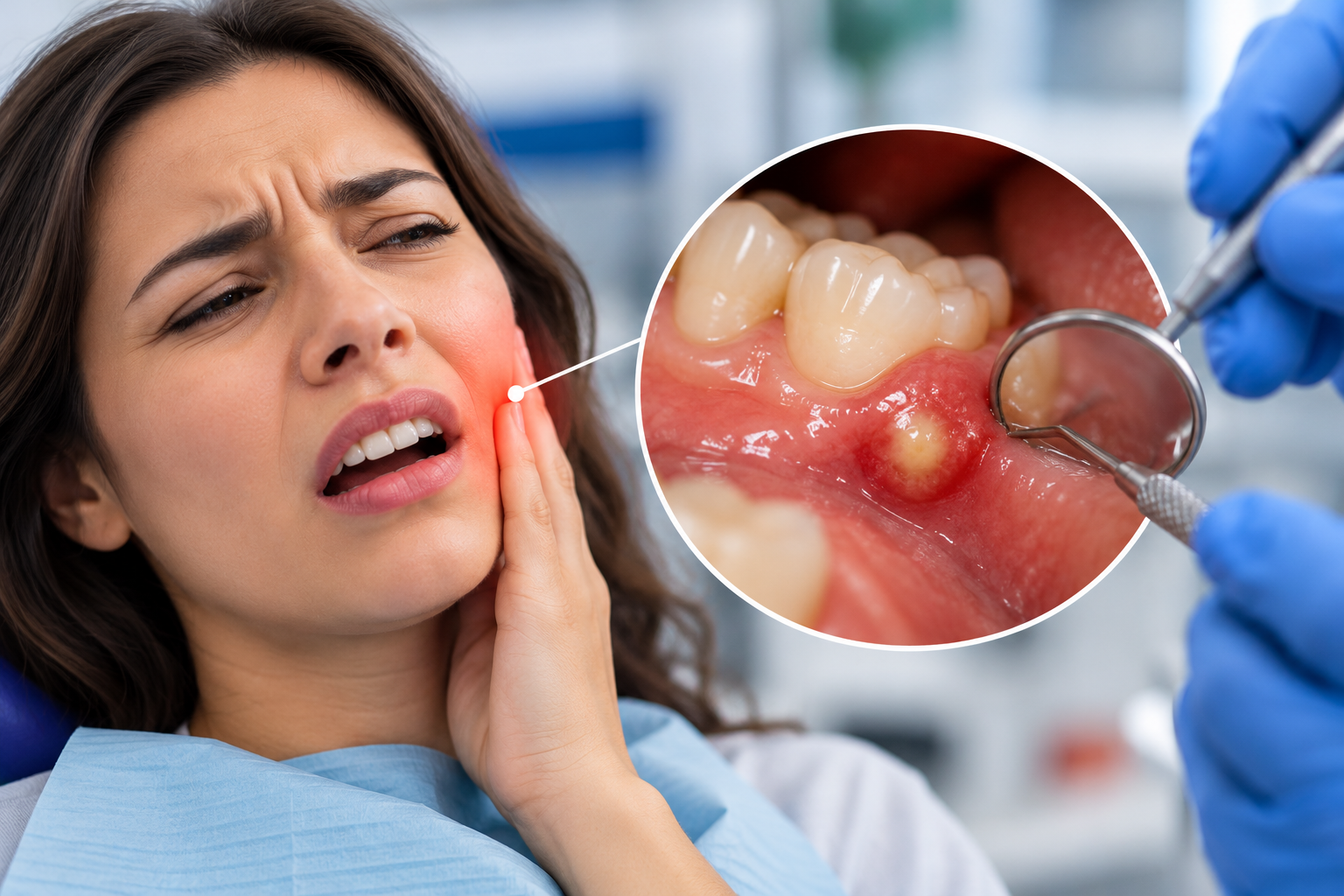
What Does an Abscessed Tooth Look Like?
Sometimes there's nothing to see at all. But when an abscess is visible, you might notice:
- A small, pimple-like bump on the gum near the root of a tooth. It can be red, white or yellow, and it may ooze pus or blood when pressed.
- Red, puffy gum tissue around one tooth
- A darkened or grayish tooth compared to its neighbors, a sign the nerve may be dying
- Visible swelling in the gum, cheek or along the jawline
- A shiny, swollen area in the gum that's tender to touch
What Does a Gum Abscess Look Like?
A gum (periodontal) abscess usually looks like a swollen, red, shiny bump on the gum beside a tooth, sometimes with a yellowish center. It may feel soft and squishy, and the gum around it is often sore and bleeds easily.
The Stages of a Tooth Infection
A tooth abscess doesn't usually appear overnight. It's the end result of a problem that's been building for a while. Here's how it typically progresses:
The earlier the problem is treated, the simpler the fix. At stages 1 and 2, a tooth-colored filling is often enough. At stages 3 and 4, the tooth usually needs a root canal. By stage 5 or 6, treatment becomes urgent. If you're not sure whether your tooth has reached the pulp, our guide to the warning signs you need a root canal can help.
Is a Tooth Abscess an Emergency?
A tooth abscess always needs prompt dental care, ideally within a day. Some symptoms, though, mean the infection may be spreading, and that needs emergency attention right away.
See a Dentist the Same Day If You Have:
- Severe or throbbing tooth pain
- A bump on your gum, pus, or a bad taste
- Swelling in your gum or a small amount of swelling in your cheek
- Pain when biting, or a tooth that feels loose
- A low fever with tooth pain
Smile Wellness offers same-day emergency dental care in Piscataway for urgent problems like this, whenever the schedule allows.
Go to the ER or Call 911 If You Have:
- Trouble breathing or swallowing
- Swelling spreading to your eye, under your jaw, or down your neck
- Swelling under your tongue or a raised floor of the mouth
- A high fever, chills, or feeling very unwell
- Confusion, dizziness or a racing heartbeat
- Difficulty opening your mouth
These can be signs that the infection has spread beyond the tooth, which needs urgent medical treatment. For a broader look at urgent dental problems, see our guide to what counts as a dental emergency.
Can a Tooth Infection Kill You?
It's rare, but yes, an untreated tooth infection can become life-threatening if it spreads. A dental infection can move into the deep spaces of the face and neck, causing a condition like Ludwig's angina that can swell the airway, or it can spread into the bloodstream and cause sepsis. These complications are uncommon, and they're almost always preventable with timely dental treatment.
There's no predictable timeline for how fast an infection spreads. It depends on the bacteria, your overall health and your immune system. That's exactly why it's never a good idea to wait and see. People with diabetes, a weakened immune system, or who are pregnant should be especially careful to get dental infections treated quickly.
Can You Pop a Tooth Abscess or Gum Abscess?
No. Please don't. It's tempting when you see a pimple-like bump on your gum, but squeezing or poking it with a needle or pin can:
- Push bacteria deeper into the tissue or bloodstream
- Introduce new bacteria from your fingers or tools
- Damage your gum
- Give you temporary relief while the actual infection keeps growing
Even if an abscess bursts on its own and the pain eases, the source of the infection is still inside the tooth or gum. A dentist can drain it safely and treat the cause.
Will Antibiotics Cure a Tooth Abscess?
No. Antibiotics alone can't cure a tooth abscess. This is one of the most common misunderstandings about tooth infections.
Antibiotics can help control a spreading infection, especially if you have fever, swelling or a weakened immune system. But the source of the infection is inside the tooth or trapped in a pocket of pus, where antibiotics can't fully reach. Without treating the tooth itself, the infection almost always comes back.
Why Does an Abscessed Tooth Still Hurt After Antibiotics?
If your tooth still hurts after a few days of antibiotics, it's usually because:
- The source of infection hasn't been removed. Antibiotics can't clean out an infected nerve or drain trapped pus.
- Pressure is still building inside the tooth or bone.
- The nerve is inflamed or dying, which hurts regardless of the infection.
That's why dentists treat the tooth with drainage, a root canal or an extraction. Antibiotics, when needed, are a helper, not the cure.
A Word About Antibiotics and "Natural Antibiotics"
- Only take antibiotics prescribed for you, and take the full course exactly as directed. Never use leftover antibiotics or someone else's prescription.
- There are no over-the-counter antibiotics for tooth infections in the U.S.
- Natural remedies like salt water, clove oil or garlic may soothe pain or keep the area cleaner, but none can cure a tooth abscess. They can buy you a little comfort, not time.
How Do Dentists Treat a Tooth Abscess?
The goal is always the same: drain the infection and remove its source. Depending on your tooth, that may include:
1. Draining the Abscess
The dentist may make a small opening to let the pus drain, which often brings fast relief from pressure and pain. Sometimes this happens through the tooth itself during a root canal.
2. Root Canal Treatment
For most periapical abscesses, the best way to save the tooth is a root canal. The infected pulp is removed, the canals are cleaned and sealed, and the tooth is usually protected with a crown afterward. Learn about root canal treatment in Piscataway, and why a crown after a root canal is usually needed for back teeth.
3. Tooth Extraction
If the tooth is too damaged to save, removing it gets rid of the infection. Our guide to tooth extraction, recovery and dry socket explains what to expect. The missing tooth can later be replaced with an implant, a bridge or a partial denture.
4. Gum Treatment
For a periodontal abscess, the dentist cleans out the pocket, removes trapped debris, and treats the underlying gum disease with periodontal disease treatment in Piscataway.
5. Antibiotics, When Needed
If the infection has spread, or you have fever, significant swelling or a weakened immune system, the dentist may prescribe antibiotics alongside treatment.
How Is a Tooth Abscess Diagnosed?
Your dentist will usually:
- Examine the tooth and gums and look for swelling or a gum bump
- Tap and press on the teeth to find the one that's tender
- Take X-rays to see the infection around the root or bone loss
- Test the tooth's nerve with a cold stimulus
- Sometimes use 3D imaging to see exactly how far an infection has spread
You can see the advanced dental technology at our Piscataway office that helps with accurate diagnosis.
How Much Does It Cost to Treat a Tooth Abscess?
The cost depends on how the abscess is treated:
Typical market ranges, not the fee schedule of any one office.
Most dental insurance plans cover infection treatment, including exams, X-rays, root canals and extractions, as basic or major care. For full breakdowns, see our guide to root canal costs in NJ. You can also review our dental insurance and financing options in Piscataway.
And remember: treating an abscess early is almost always cheaper. Waiting can turn a saveable tooth into an extraction and replacement, or a routine visit into an emergency.
What to Do Until You Can See a Dentist
These steps can help you stay more comfortable, but they don't treat the infection:
- Rinse with warm salt water (½ teaspoon of salt in a glass of warm water) several times a day.
- Take over-the-counter pain relievers, like ibuprofen or acetaminophen, exactly as the label directs. Ask a pharmacist if you take other medications.
- Use a cold compress on the outside of your cheek, 15 minutes on and 15 minutes off.
- Keep your head raised when lying down to reduce throbbing.
- Avoid very hot, cold or sugary foods and drinks.
- Chew on the other side.
- Don't put aspirin directly on your gum. It can burn the tissue.
- Don't apply heat to swelling on your face.
- Don't try to pop or drain the abscess yourself.
Can a Tooth Abscess Go Away on Its Own?
No. The pain might come and go, and the abscess might drain on its own, but the infection doesn't heal without treatment. Bacteria trapped inside the tooth or bone stay there, and the abscess usually returns, often worse than before.
How to Prevent a Tooth Abscess
Most abscesses start as small, fixable problems. To lower your risk:
- Brush twice a day with fluoride toothpaste and floss daily. Our home dental care tips cover the essentials.
- Get regular cleanings and checkups so cavities and gum problems are caught early. Book your professional dental cleaning in Piscataway.
- Treat cavities promptly. A small filling now can prevent a root canal later.
- Strengthen your enamel with fluoride treatments in Piscataway.
- Fix cracked or chipped teeth before bacteria get inside.
- Replace old, failing fillings and crowns when your dentist recommends it.
- Limit sugary snacks and drinks, especially between meals.
- Keep an eye on your wisdom teeth, especially if they've only partly come in.
Tooth Abscess Treatment in Piscataway, NJ at Smile Wellness Dental
If you think you have a tooth abscess, the sooner you're seen, the more likely your tooth can be saved, and the faster you'll feel better. At Smile Wellness Dental, Dr. Pooja Tanna, DDS, and our team treat tooth infections every week, from drainage and root canals to extractions, at our office at 1080 Stelton Road. We're a short drive from Edison and South Plainfield.
Here's what you can expect:
- Prompt care for urgent problems, with same-day appointments whenever the schedule allows
- A clear diagnosis with an exam and digital X-rays
- Relief first, then a plan to treat the source of the infection
- Honest options, including whether the tooth can be saved
- Help with insurance, so you know what's covered
- A gentle, no-judgment approach, however long you've been putting it off
"You deserve to feel comfortable, and not judged. We listen to you, explain every step and use a very gentle approach. We are here to help you achieve a healthier smile." Dr. Pooja Tanna, DDS, Smile Wellness Dental
If dental visits make you anxious, our guide to taming dental anxiety has practical tips. You can also read Smile Wellness Dental patient reviews on Google, meet the dental team at Smile Wellness Piscataway, or see what to expect at your first dental visit in Piscataway.
Think You Have a Tooth Abscess? Don't Wait
A tooth infection won't go away on its own, but it's very treatable when caught early. If you have pain, swelling or a bump on your gum, book an emergency dental appointment in Piscataway as early as possible, or call our Piscataway dental office so we can get you in quickly.
Smile Wellness Dental 1080 Stelton Rd, Suite 201, Piscataway, NJ 08854 Phone: (732) 572-8888 Mon 9–5 · Tue–Thu 10–6 · Fri 8–4 · Sat 8–1 · Sun closed Get directions to Smile Wellness Dental on Google Maps
If you have trouble breathing or swallowing, or swelling spreading toward your eye or neck, call 911 or go to the nearest emergency room.
Frequently Asked Questions About Tooth Abscesses
What are the symptoms of an abscessed tooth?
Common symptoms of an abscessed tooth include severe, throbbing pain that may spread to the ear or jaw, lingering sensitivity to hot and cold, pain when chewing, a pimple-like bump on the gum, a bad taste or bad breath, swollen gums, facial swelling, swollen lymph nodes and sometimes fever.
Is a tooth abscess an emergency?
A tooth abscess always needs prompt dental care, ideally within a day. It becomes an emergency if you have trouble breathing or swallowing, swelling spreading to your eye or neck, a high fever, or you feel very unwell. In those cases, go to the ER or call 911 right away.
What does an abscessed tooth look like?
An abscessed tooth may show a small pimple-like bump on the gum near the root, which can be red, white or yellow and may ooze pus. You might also see red, swollen gums, swelling in the cheek or jaw, or a tooth that looks darker than the teeth around it.
Can a tooth abscess go away on its own?
No. A tooth abscess won't heal on its own. The pain may ease if the abscess drains or the nerve dies, but the infection remains inside the tooth or bone and usually returns. It needs dental treatment, such as drainage, a root canal or an extraction.
Will antibiotics cure a tooth abscess?
No. Antibiotics can help control a spreading infection, but they can't fully reach the source inside the tooth or drain trapped pus. Without dental treatment like a root canal or extraction, the infection usually comes back. Only take antibiotics prescribed for you, exactly as directed.
Can you pop a tooth abscess?
You should never try to pop a tooth or gum abscess yourself. Squeezing or poking it can push bacteria deeper, cause a new infection and damage your gum, and it doesn't treat the source. A dentist can safely drain the abscess and treat the underlying problem.
Can a tooth infection kill you?
In rare cases, yes. If a tooth infection isn't treated, it can spread to the face, neck or bloodstream and cause serious conditions like Ludwig's angina or sepsis. These complications are uncommon and almost always preventable with timely dental treatment, so don't wait to get an abscess checked.
How is a tooth abscess treated?
A tooth abscess is treated by draining the infection and removing its source. That usually means a root canal to save the tooth, or an extraction if the tooth can't be saved. A gum abscess is cleaned out and the gum disease treated. Antibiotics may be added if the infection has spread.
Where can I get a tooth abscess treated in Piscataway, NJ?
Smile Wellness Dental at 1080 Stelton Rd, Suite 201, Piscataway, NJ treats tooth abscesses and infections with drainage, root canals and extractions under the care of Dr. Pooja Tanna, DDS, with same-day appointments for urgent cases whenever the schedule allows. Call (732) 572-8888.


