


Root Canal or Pull the Tooth? How to Decide, and What Each Really Costs
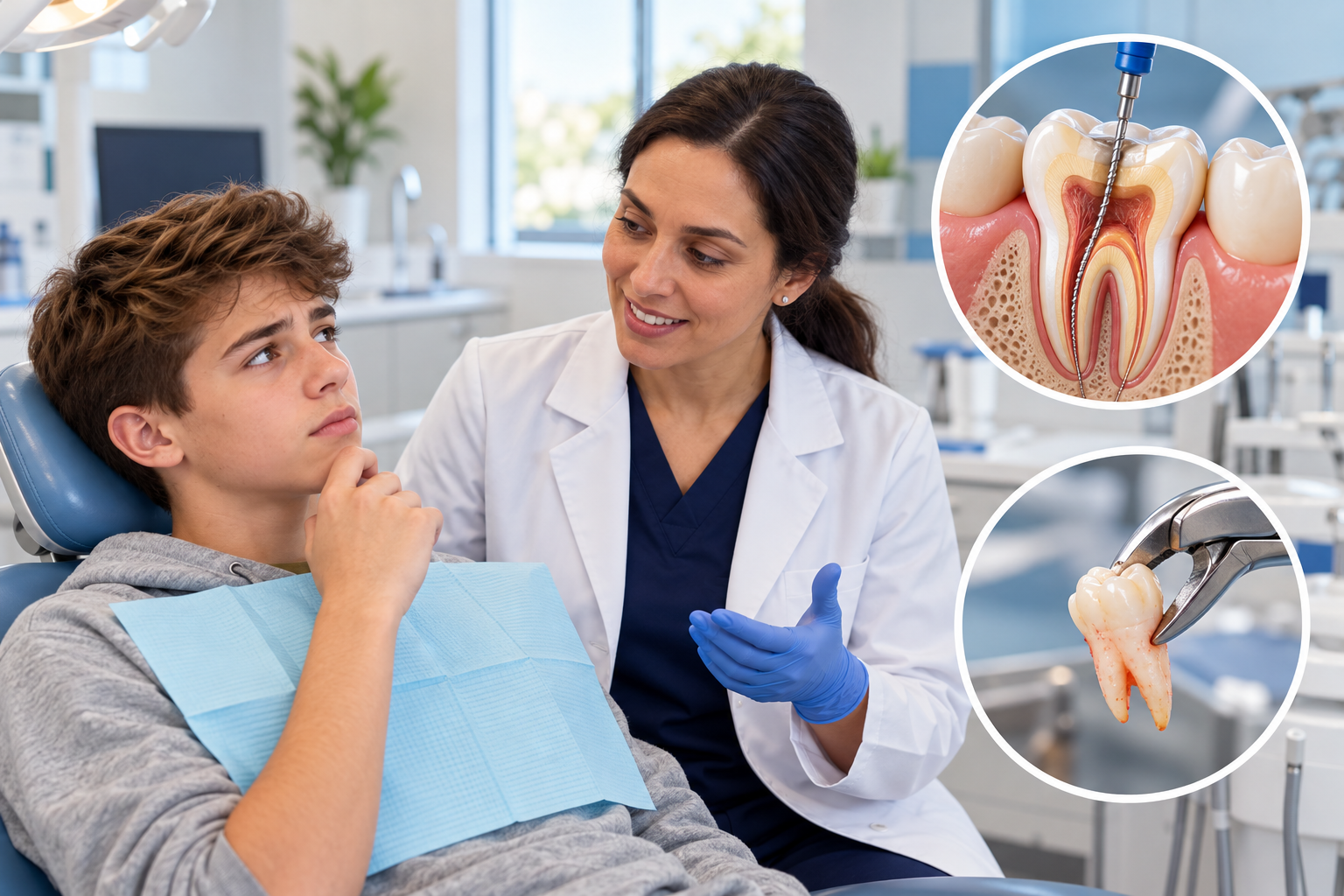


By the Smile Wellness Dental Team · Medically reviewed by Dr. Pooja Tanna, DDS · Updated November 2026
Your tooth hurts, your dentist says the nerve is infected, and now you're facing a choice: save it with a root canal, or just pull it out?
If you're like a lot of people, your first thought might be, "Pulling it is cheaper and faster. Why not just take it out?" It's a completely fair question. A simple extraction can cost a few hundred dollars, while a root canal and crown on a back tooth can cost a few thousand. When money is tight, or the holidays are around the corner, that difference matters.
But the price you pay today isn't the whole story. What happens after the tooth is gone can affect your bite, your other teeth, and your wallet for years.
In this guide, we'll compare root canals and extractions honestly: how much each really costs (including what comes after), how they compare for pain and recovery, what happens if you pull a tooth and never replace it, which teeth you can lose without much trouble, and how to keep costs down if budget is the deciding factor.
Quick answer: If your tooth can be saved, a root canal is usually the better long-term choice. It keeps your natural tooth, protects your bite, and often costs less over time than pulling the tooth and replacing it. Extraction makes more sense when the tooth can't be saved, is a wisdom tooth, or isn't needed for chewing. In NJ, an extraction typically costs 150–800, but replacing the tooth afterward adds about 700–6,000. A molar root canal with a crown typically costs 2,450–5,500.
In this guide:
- Root canal vs. extraction: side-by-side comparison
- What each really costs, short term and long term
- What happens if you don't replace a pulled tooth
- Which teeth you can lose, and which you shouldn't
- When extraction is the right choice
- Pain and recovery
- Myths about root canals and extractions
- If cost is the reason you're thinking of pulling it
Root Canal vs. Tooth Extraction: What's the Difference?
A root canal saves the tooth. Your dentist removes the infected or inflamed nerve tissue (the pulp) from inside the tooth, cleans and disinfects the root canals, and seals them. Most back teeth then get a crown to protect them. Your natural tooth stays in place. Learn more about root canal treatment in Piscataway.
An extraction removes the tooth. The tooth is numbed and gently lifted out of its socket. A simple extraction is quick. A surgical extraction, for a broken or hard-to-reach tooth, takes a little longer. After that, you'll need to decide whether to replace the tooth or leave the space. Learn more about tooth extraction in Piscataway.
Both treatments get rid of the infection and the pain. The difference is what you're left with afterward.
Side-by-Side Comparison
Is It Cheaper to Pull a Tooth or Get a Root Canal?
Today, pulling the tooth is almost always cheaper. Over time, it often isn't, because most pulled teeth (especially molars and front teeth) should be replaced.
Here's what each path typically costs in New Jersey for a back tooth (molar), before insurance:
Typical market ranges, not the fee schedule of any one office. Your exact cost depends on your tooth and treatment plan.
What this shows:
- Extraction alone is the cheapest option, but only if you truly don't need the tooth replaced (more on that below).
- If you'd replace the tooth with a bridge or implant, pulling it usually ends up costing as much as or more than saving it.
- A partial denture can be a lower-cost replacement, though many people find removable partials less comfortable than a natural tooth.
For a full breakdown of each option, see our guides to root canal costs in NJ with and without insurance, tooth extraction costs and recovery, and dental implants vs. bridges vs. dentures. If you're specifically weighing a root canal against an implant, we compare those two in depth in our guide to root canal vs. dental implant.
What About Front Teeth?
Front teeth change the math. A front-tooth root canal is usually less expensive, about $900 – $1,400, and many front teeth only need a tooth-colored filling afterward instead of a crown. And very few people are comfortable leaving a gap in their smile, so pulling a front tooth almost always means paying to replace it. For front teeth, saving the tooth is usually the clear winner on cost and appearance.
Does Insurance Cover Root Canals and Extractions?
- Root canals: commonly covered at about 50% to 80% after your deductible.
- Crowns: usually about 50% as a major service.
- Extractions: commonly covered at about 50% to 80%, depending on your plan.
- Replacements (bridges, partials, implants): often 50% as a major service, and some plans don't cover implants at all.
- Annual maximums (often 1,000–2,000) limit what insurance pays each year.
You can review our dental insurance and financing options in Piscataway and check current new patient specials at Smile Wellness.
What Happens If You Pull a Tooth and Don't Replace It?
This is the part most people don't hear about until later. When a tooth is removed and the space is left empty, your mouth slowly changes around the gap:
Not every missing tooth causes all of these problems, and they usually happen gradually. But the longer a gap stays open, the more it tends to cost to fix later. If you do choose extraction, talk with your dentist about whether, and how soon, to replace the tooth.
Which Teeth Can You Lose, and Which Shouldn't You?
Every tooth has a job, but some matter more than others:
Is It Okay to Pull a Molar Instead of Getting a Root Canal?
Sometimes. It depends on which molar and on your bite:
- Wisdom teeth: pulling is usually the better choice. Root canals on wisdom teeth are rarely worth it.
- Second molars: if it's the last tooth in the row and the opposing tooth is also missing or wouldn't over-erupt, some people do fine without it. Your dentist can tell you if that's likely in your case.
- First molars: these do the heaviest chewing. Losing one without replacing it is the most likely to cause drifting and bite problems. If it can be saved, a root canal and crown is usually the better investment.
Molar root canals are more complex (molars have 3–4 canals) and almost always need a porcelain dental crown afterward. Our guide to getting a crown after a root canal explains why.
When Is Extraction the Right Choice?
Saving a tooth isn't always the right answer. Extraction is often the better option when:
- The tooth can't be restored. Decay or breakage has left too little healthy tooth to hold a crown.
- There's a vertical root fracture or a crack that runs below the gum line.
- Severe gum disease has destroyed much of the bone support and the tooth is very loose.
- It's a wisdom tooth that's infected, impacted or causing problems.
- A previous root canal has failed and retreatment isn't a good option.
- Orthodontic treatment requires removing a tooth to make space.
- A baby tooth is badly infected, and the adult tooth underneath will replace it. (Your dentist may recommend a space maintainer.)
- Medical reasons make a longer treatment impractical right now.
Extraction can also be a reasonable personal choice, as long as you understand what comes next. A good dentist will respect that decision and help you plan for it.
When Is a Root Canal the Better Choice?
A root canal is usually the better choice when:
- The tooth has an infected or inflamed nerve but plenty of healthy structure left
- The root and surrounding bone are healthy
- It's a front tooth, canine or first molar that would need replacing if pulled
- You want to avoid the cost and time of a bridge or implant later
- You'd like to keep your natural bite and bone as they are
Common signs that a tooth needs a root canal include pain that lingers after hot or cold, throbbing pain, pain when biting, and a pimple-like bump on the gum. See the 7 warning signs you might need a root canal.
Cracked Tooth: Root Canal or Extraction?
It depends on where the crack is and how far it goes:
- A crack in the top of the tooth that reaches the nerve can often be treated with a root canal and a crown.
- A crack that runs down the root or below the gum line usually can't be repaired, and extraction is often the best option.
Your dentist will use an exam and digital dental X-rays to see how deep the crack goes.
Which Hurts More, a Root Canal or an Extraction?
Neither should hurt during treatment, because both are done with local anesthetic. Many people say a root canal feels much like getting a deep filling, and it relieves the pain of an infected tooth.
Afterward:
- Root canal: mild soreness or tenderness when chewing for a few days, usually handled with over-the-counter pain relievers.
- Extraction: soreness and some swelling for a few days while the socket heals, with a small risk of dry socket, a painful condition where the blood clot in the socket is lost. Following aftercare instructions lowers that risk.
Recovery from a simple extraction is usually quick, but a surgical extraction can take longer. Our guide to tooth extraction recovery and how to avoid dry socket walks you through it day by day. (We'll cover how long a root canal takes and what it feels like in an upcoming guide.)
Myths About Root Canals and Extractions
Myth: "Root canals are extremely painful."
With modern anesthesia and techniques, most people find a root canal no more uncomfortable than a filling. The pain people associate with root canals usually comes from the infection before treatment, not the treatment itself.
Myth: "Pulling the tooth is always easier."
An extraction is often quicker on the day, but it can bring more healing time, a risk of dry socket, and the cost and time of replacing the tooth later.
Myth: "Root canals make you sick."
This idea comes from research done about a century ago that has since been discredited. There's no valid scientific evidence that root-canal-treated teeth cause disease elsewhere in the body. In fact, leaving an infected tooth untreated is what poses a real risk. Learn more in our guide to tooth abscess signs and when it's an emergency.
Myth: "If it stops hurting, it's healed."
When the nerve inside an infected tooth dies, the pain can stop for a while, but the infection is still there and can spread. A tooth that suddenly stops hurting still needs to be checked.
Myth: "Antibiotics can fix it instead."
Antibiotics can help control a spreading infection, but they can't reach the source inside the tooth. The infection will come back unless the tooth is treated with a root canal or removed.
If Cost Is the Reason You're Thinking of Pulling the Tooth
That's a real and common concern, and there's no shame in it. Before you decide, it's worth knowing that there are ways to make saving a tooth more affordable:
1. Time Your Treatment Around Your Insurance Year
Many dental plans reset on January 1, so any benefits you haven't used by December 31 are lost. If you still have benefits left this year, starting treatment now can save you a lot.
You may also be able to split treatment across two plan years. For example, the root canal in December and the crown in early January, using two annual maximums. Ask your dentist whether it's safe to wait a few weeks for the crown, since a root-canal-treated back tooth shouldn't go too long without one. Our guide to using your dental insurance and FSA before December 31 explains how this works.
2. Use Your FSA or HSA
Root canals, crowns and extractions are all qualified expenses for FSA and HSA funds. Many FSAs have a "use it or lose it" deadline at the end of the year.
3. Ask About Payment Options
Many dental offices offer payment options or work with financing companies to spread the cost over time. Ask what's available before you decide.
4. Ask for a Written, Itemized Quote for Both Paths
Seeing the full cost of saving the tooth next to the full cost of pulling and replacing it makes the decision much clearer.
5. Don't Wait Too Long
The cheapest root canal is the one done early. If you wait, the infection can spread, the tooth can break further, and a tooth that could have been saved may end up needing to be pulled anyway.
Lower-Cost Options to Know About
If cost is still a barrier, dental schools and community health centers in many areas offer treatment at reduced fees. It can take longer, but it's worth knowing about.
Questions to Ask Your Dentist Before You Decide
- Can this tooth be saved, and what's its long-term outlook?
- If I pull it, will I need to replace it? What happens if I don't?
- What's the total cost of each path, including the crown or the replacement?
- How much will my insurance cover for each option this year?
- Can treatment be split across two plan years safely?
- Is there a crack, and how far does it go?
- How soon does this need to be done?
If you're unsure, it's completely reasonable to get a second opinion before having a tooth removed. An extraction can't be undone.
Root Canals and Tooth Extractions in Piscataway, NJ at Smile Wellness Dental
At Smile Wellness Dental, we provide both root canal treatment and tooth extractions under the care of Dr. Pooja Tanna, DDS, at our office at 1080 Stelton Road, a short drive from Edison and South Plainfield. Because we do both, our goal is simply to help you choose what's best for your tooth, your health and your budget.
Here's what you can expect:
- A thorough exam and digital X-rays to see whether your tooth can be saved
- An honest recommendation, including the long-term outlook for the tooth
- Itemized quotes for each option, plus help checking your insurance and FSA benefits
- A clear plan if you choose extraction, including whether and how to replace the tooth
- Modern diagnostics, including the advanced dental technology at our Piscataway office
"You deserve to feel comfortable, and not judged. We listen to you, explain every step and use a very gentle approach. We are here to help you achieve a healthier smile." Dr. Pooja Tanna, DDS, Smile Wellness Dental
In pain right now? Our emergency dental care in Piscataway page explains how to reach us, with same-day appointments whenever the schedule allows. If dental visits make you nervous, our guide to taming dental anxiety can help.
You can also read Smile Wellness Dental patient reviews on Google, meet the dental team at Smile Wellness Piscataway, or see what to expect at your first dental visit in Piscataway.
Not Sure Whether to Save Your Tooth or Pull It?
A quick exam can give you a clear answer and real numbers for both options. Book your root canal or extraction consultation in Piscataway, or call our Piscataway dental office with your questions and insurance details.
Smile Wellness Dental 1080 Stelton Rd, Suite 201, Piscataway, NJ 08854 Phone: (732) 572-8888 Mon 9–5 · Tue–Thu 10–6 · Fri 8–4 · Sat 8–1 · Sun closed Get directions to Smile Wellness Dental on Google Maps
Frequently Asked Questions About Root Canals vs. Extractions
Is it better to get a root canal or pull the tooth?
If the tooth can be saved, a root canal is usually better long term. It keeps your natural tooth, protects your bite and bone, and often costs less over time than pulling the tooth and replacing it. Extraction is often the better choice for wisdom teeth, teeth that can't be restored, or teeth with cracks running down the root.
Is it cheaper to pull a tooth or get a root canal?
Pulling a tooth is cheaper upfront, typically $150 to $800 in New Jersey, while a molar root canal with a crown typically costs $2,450 to $5,500. But replacing a pulled tooth with a partial denture, bridge or implant adds about $700 to $6,000, so saving the tooth often costs about the same or less over time.
What happens if you pull a tooth and don't replace it?
Over months to years, the jawbone where the tooth was shrinks, neighboring teeth can tilt into the gap, and the opposite tooth can grow into the space. This can create food traps, change your bite and make future replacement harder and more expensive. Wisdom teeth and some second molars are exceptions that usually don't need replacing.
Is it okay to pull a molar instead of getting a root canal?
It depends on which molar. Wisdom teeth are usually best pulled. A second molar at the end of the row can sometimes be left out without major problems. A first molar does the heaviest chewing, and losing it without replacement is likely to cause drifting and bite problems, so saving it is usually the better investment.
Which hurts more, a root canal or an extraction?
Neither should hurt during treatment, because both use local anesthetic. After a root canal, most people have mild soreness for a few days. After an extraction, expect soreness and some swelling while the socket heals, plus a small risk of dry socket. Most people find recovery from either manageable with over-the-counter pain relievers.
When is extraction better than a root canal?
Extraction is often better when the tooth can't be restored, has a crack running down the root or below the gum line, is very loose from severe gum disease, is a problem wisdom tooth, or has a failed root canal that can't be retreated. It's also sometimes needed to make space for orthodontic treatment.
Can I get a root canal now and the crown later?
Often, yes, but not for too long. A root-canal-treated back tooth is more brittle and can crack without a crown, so most dentists recommend placing the crown within a few weeks. Splitting the root canal and crown across two insurance years can sometimes save money. Ask your dentist whether waiting is safe for your tooth.
Do root canals make you sick?
No. The idea that root canals cause illness comes from research done about a century ago that has since been discredited. There's no valid scientific evidence that root-canal-treated teeth cause disease elsewhere in the body. Leaving an infected tooth untreated is the real risk, because the infection can spread.
Does insurance cover root canals and extractions?
Most dental plans cover root canals and extractions at about 50 to 80 percent after the deductible, and crowns at about 50 percent. Replacements like bridges, partial dentures and implants are often covered at 50 percent as major services, though some plans don't cover implants. Annual maximums limit yearly payouts, and FSA or HSA funds can be used.
Where can I get a root canal or tooth extraction in Piscataway, NJ?
Smile Wellness Dental at 1080 Stelton Rd, Suite 201, Piscataway, NJ provides both root canal treatment and tooth extractions under the care of Dr. Pooja Tanna, DDS. The office is a short drive from Edison and South Plainfield and offers same-day emergency appointments whenever the schedule allows. Call (732) 572-8888.


